GLP-1 Weight Loss: Protect Muscle, Ease Nausea and Eat Better
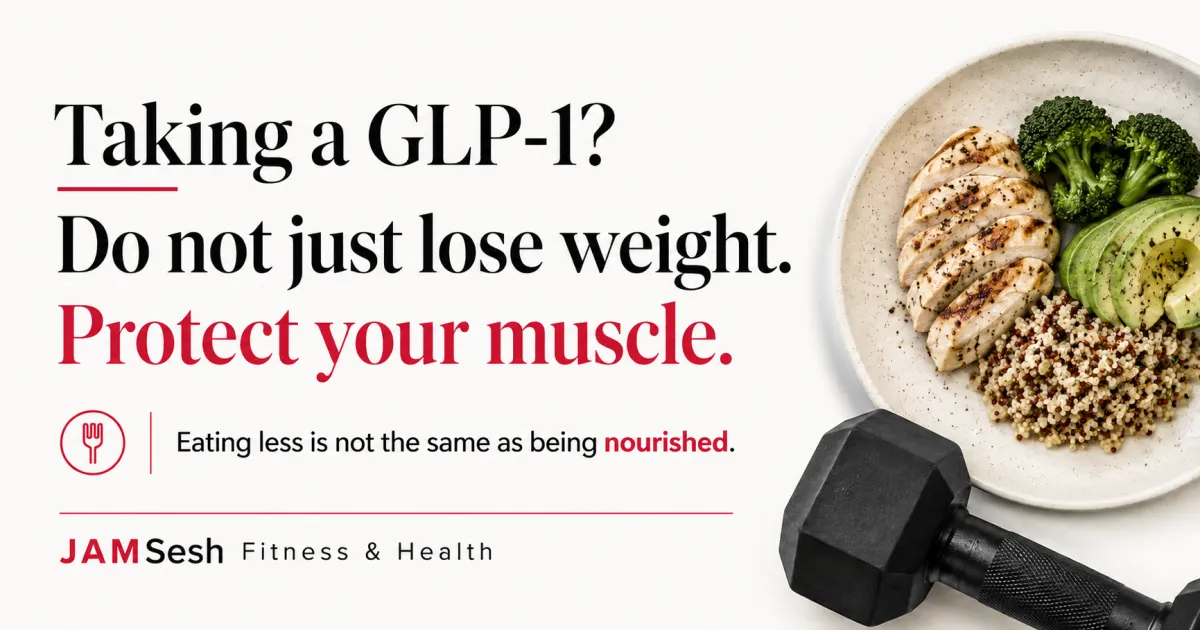
Taking a GLP-1? Eating Less Is Only Part of the Plan
GLP-1 medications have changed the weight-loss conversation.
For many people, they quiet the constant food noise. Cravings feel less relentless. Portions become easier to manage. Blood sugar patterns may improve. The scale may finally move after years of frustration.
That can feel like a massive relief.
But there is a question I wish more people were asking:
What are you doing to support your body while your appetite is lower?
Because eating less is not the same as being nourished.
And losing weight is not automatically the same as becoming stronger, healthier, or more metabolically resilient.
A GLP-1 may be a useful tool.
But it is not the whole plan.
The medication may lower the noise.
Your daily choices still build the foundation.
The Scale Is Moving. But What Is Happening Behind the Scenes?
When the number on the scale starts dropping, it is easy to focus on the obvious wins.
Your clothes fit better.
You are snacking less.
You are thinking about food less often.
You may feel like you finally have some breathing room.
Those wins matter.
But the scale cannot tell you whether:
you are protecting your muscle
you are eating enough protein
constipation is quietly getting worse
your energy is improving or slowly tanking
you are adequately hydrated
you are eating real meals or surviving on crackers, coffee, and a protein bar
you are building habits that will still support you long-term
A smaller body is not the dream if it comes with weakness, exhaustion, poor digestion, hair shedding, or a metabolism that feels less resilient than it did before.
The goal is not just to lose weight.
The goal is to support your body while you lose weight.
That requires more than taking the medication and hoping the rest sorts itself out.
Why Digestion Can Feel Different on a GLP-1
Many medications in this category slow gastric emptying, which means food leaves the stomach more slowly.
That can help you feel full longer.
It can also contribute to symptoms such as:
nausea
constipation
reflux
bloating
burping
feeling overly full after a small meal
food aversions
Not everyone experiences these symptoms.
But if you do, your usual eating habits may suddenly stop working well.
A large restaurant meal that felt fine before may now feel like it signed a lease in your stomach and has no plans to move out.
This is where strategy matters.
What Should You Eat Before Your Weekly Injection?
Let’s clear something up first.
There is no magical pre-shot meal that prevents nausea for everyone.
You do not need a ceremonial chicken breast at precisely 6:42 p.m.
But if you tend to feel nauseated after your weekly dose, what you eat around injection day can make the experience easier or harder.
Official guidance for managing nausea with medications in this category includes:
eating smaller meals
stopping when you feel full
avoiding fatty foods
trying bland foods such as toast, crackers, or rice if nausea is an issue
drinking fluids consistently
A smarter pre-shot approach
If you tend to feel queasy after your injection, choose a smaller meal that is lower in fat and easy to digest.
Include some protein if you tolerate it well, plus a gentle carbohydrate.
Examples:
grilled chicken with rice and cooked vegetables
turkey with a baked potato
scrambled eggs with toast
chicken soup with rice or potatoes
Greek yogurt with banana, if dairy sits well for you
a simple protein smoothie if solid food feels like too much
The goal is not perfection.
It is a calmer digestive load.
What I would avoid before your injection if nausea is already an issue
This is probably not the best time for:
a giant burger and fries
heavy pizza
rich cream sauces
deep-fried food
a very high-fat restaurant meal
eating until you are stuffed because you are worried you may not feel hungry tomorrow
That last one matters.
Some people overeat before their dose because they think they should “get food in while they can.”
That may backfire.
Do not starve yourself.
Do not stuff yourself.
Keep it simple.
Your Shot-Day Strategy Does Not Need to Be Complicated
If nausea, fullness, or constipation tend to flare around your weekly dose, start with the boring basics.
The boring basics are underrated.
Earlier in the day, eat balanced meals in moderate portions.
Prioritize:
lean protein
easy-to-digest carbohydrates
cooked vegetables if raw foods make you bloated
fluids throughout the day
smaller portions if fullness is an issue
After your injection, slow down.
Chew well.
Stop eating when your body says it is full.
Go for a gentle walk after meals if you feel able.
If nausea hits, bland foods may be easier temporarily.
But do not let crackers become your long-term nutrition plan.
Once your stomach settles, your body still needs nourishment.
The Quiet Problem: Eating Less Can Become Barely Eating
This is where the GLP-1 conversation needs more honesty.
Lower appetite can be helpful.
But there is a point where appetite suppression turns into undernourishment.
You may feel proud because you barely ate all day.
But your body may be receiving:
very little protein
inadequate fiber
fewer minerals
not enough fluids
minimal real food
too little fuel to recover from exercise
too little nutritional support for hair, muscle, sleep, and energy
That is not a long-term win.
It is just a smaller calorie intake wearing a wellness costume.
Your food choices matter more when you are eating less, not less.
When appetite is quieter, every bite has a job.
Protein First Does Not Mean Food Fear
Protein needs to become the anchor.
Not because carbs are bad.
Not because every meal needs to look like a bodybuilder’s meal-prep container.
And not because you need to become obsessive.
Your body still needs amino acids.
Your muscles still need a reason to stay.
Your body still needs raw materials for recovery, strength, hair, skin, connective tissue, and immune function.
Before you eat, ask one simple question:
Where is my protein?
Easy options include:
eggs
Greek yogurt
cottage cheese
chicken
turkey
fish
lean beef
tofu or tempeh
protein smoothies (My Favorite Clean Easy to Digest Whey Protein - use Coupon Code - healthycoachja)
tuna or salmon packets
beans or lentils paired with another protein source
If appetite is low, start with protein before you fill up on snack foods or side dishes.
You do not need a complicated nutrition spreadsheet to start making better choices.
But you do need a plan.
What About Constipation?
Constipation deserves more than a casual mention.
The instinct is often:
“I need a huge amount of fiber immediately.”
Maybe.
But not always.
If your digestion is already sluggish, suddenly adding a mountain of fiber without enough fluid or movement may leave you feeling even more bloated and uncomfortable.
Start with the foundations:
drink fluids consistently
walk after meals
eat smaller meals
chew well
add fiber gradually
include cooked vegetables if raw vegetables feel too harsh
pay attention to how often you are having bowel movements
talk to your provider if constipation persists or worsens
Do not ignore constipation until it becomes your entire personality.
What about digestive enzymes?
Digestive enzymes may help some people who feel like food is not breaking down well. (My favorite GO-TO Digestive Enzyme)
But they do not automatically fix the primary issue when digestion slows down because food is moving through the stomach and digestive tract more slowly.
That is why blindly adding supplements is not always the answer.
Pay attention to the actual pattern.
Then support the right problem.
Strength Training Is Not an Optional Extra
There is a reason I keep talking about muscle.
Muscle is not just about looking toned.
Muscle supports:
glucose regulation
insulin sensitivity
daily function
joint support
strength and independence
healthy aging
long-term weight maintenance
If the scale goes down while your strength disappears too, that is not the outcome we are chasing.
Do not just shrink. STRENGTHEN.
You do not need punishing workouts.
You do not need to crawl to the couch questioning every life decision you have ever made.
You do need consistency.
A realistic foundation may include:
two to four full-body strength sessions each week
progressive resistance that matches your current ability
walking after meals
mobility and recovery work
enough protein to support your training
The best program is not the most dramatic one.
It is the one you can actually repeat.
Minerals Still Matter When You Eat Less
When your food intake drops, your mineral intake may drop too.
That matters because minerals help support:
hydration
muscle contraction
nervous system function
energy production
blood sugar regulation
digestion
sleep
stress response
recovery
This does not mean everyone should immediately buy a drawer full of supplements.
It means your symptoms deserve attention.
Pay attention if you start noticing:
muscle cramps
dizziness
headaches
fatigue
constipation
poor sleep
cravings
weakness
feeling depleted
Your body is not being dramatic.
It is giving you information.
What Is Retatrutide, and Why Is It Getting So Much Attention?
You may have heard the name retatrutide online.
It is sometimes casually called a “GLP-3,” but that is not the accurate scientific name.
Retatrutide is an investigational, once-weekly triple hormone receptor agonist.
It activates receptors for:
GLP-1
GIP
glucagon
Why the latest data are getting attention
Eli Lilly recently announced topline Phase 3 results from its TRIUMPH-1 obesity trial.
At 80 weeks, participants receiving the 12 mg dose lost an average of 28.3% of their body weight.
Lilly also reported that 45.3% of participants in that group reached at least 30% weight loss.
Those numbers are understandably getting attention.
But here is the part social media needs to say louder:
Retatrutide is still investigational.
It is not approved for public use.
It should not be purchased online or taken outside a legitimate clinical trial.
And promising headline numbers do not eliminate the need to understand safety, side effects, muscle preservation, nutrition quality, and long-term outcomes.
More powerful medication does not make the foundations less important.
It makes those foundations more important.
Stronger Medication Does Not Replace Stronger Habits
The medication landscape is changing quickly.
That can be exciting.
But even if medications become more effective at reducing weight, you still need to ask:
Am I eating enough protein?
Am I protecting my strength?
Am I adequately hydrated?
Am I supporting digestion?
Am I eating real food?
Am I recovering from exercise?
Am I paying attention to symptoms?
Am I working with a prescribing provider?
Am I building habits that can support my body long-term?
This is not about blame.
It is about ownership.
There is a difference.
A GLP-1 may help make the work feel more possible.
But it does not replace your role in the process.
And that is actually good news.
Because it means you are not powerless.
Where Accountability Fits In
Most people do not need another person shaming them into eating less.
They need support making better decisions while their appetite, digestion, and energy may be changing.
That may mean learning how to:
build meals that support muscle
choose foods that feel manageable around shot day
strength train without overdoing it
notice when constipation, weakness, or low energy need attention
recognize when “eating less” has crossed into “barely nourishing myself”
adjust the plan when real life happens
Medication can be part of the plan.
But accountability helps turn the opportunity into something sustainable.
That is where coaching can matter.
Not because you need someone policing every bite.
Because you deserve a plan that helps you become stronger, not just smaller.
Your Next Step
If you are using a GLP-1, considering one, or trying to lose weight without sacrificing your strength and energy, start with the foundations.
Download my free GLP-1 Muscle, Mineral & Metabolism Checklist.
It gives you the practical weekly structure that this article intentionally does not turn into a giant wall of instructions.
You can use it to stay focused on the pieces that matter while your body changes.
Because the goal is not just to eat less.
The goal is to support your body while it changes.
1. Wegovy prescribing information and official patient safety information: semaglutide delays gastric emptying, and gastrointestinal symptoms can occur.
2. Official Zepbound guidance for nausea and GI side effects: smaller meals, stopping when full, avoiding fatty foods, trying bland foods, and drinking fluids may help.
3. Eli Lilly retatrutide explainer: retatrutide is an investigational once-weekly triple agonist targeting GIP, GLP-1, and glucagon receptors, and it is not approved for public use.
4. Eli Lilly TRIUMPH-1 Phase 3 topline announcement: company-reported results included average body-weight reduction of 28.3% at 80 weeks for the 12 mg dose and at least 30% weight loss in 45.3% of that group.
Medical Note
This article is for education only and is not medical advice.
GLP-1 medications and other prescription weight-management medications should be managed with a licensed healthcare provider. Talk with your prescribing provider before starting, stopping, increasing, decreasing, or changing any medication.
Contact your healthcare provider if you experience severe or persistent nausea, vomiting, diarrhea, constipation, abdominal pain, dehydration, or any symptom that concerns you.
Retatrutide is investigational and has not been approved for public use. It should only be used within legitimate clinical trials.


