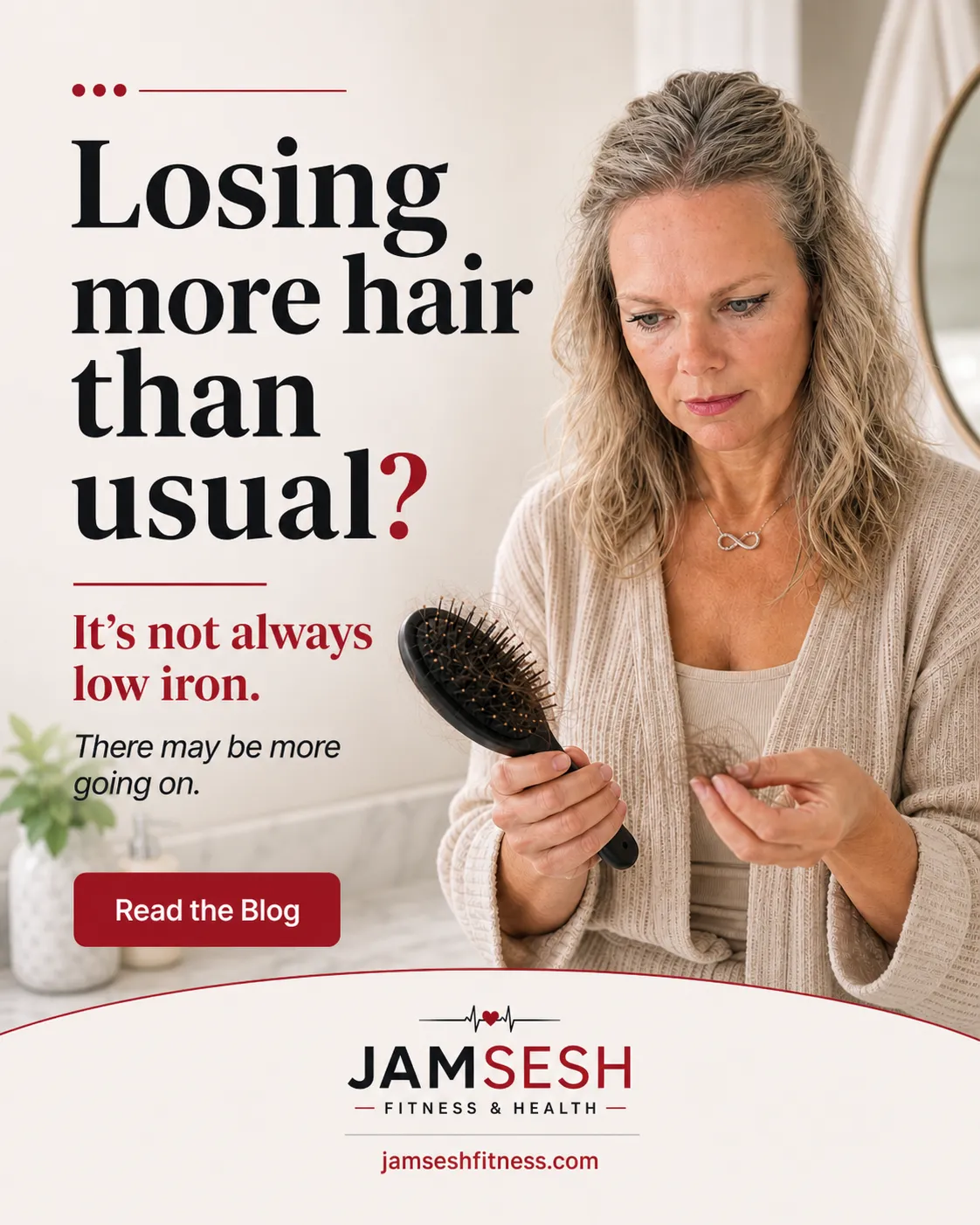
Woman noticing hair loss in her brush with text explaining that hair loss is not always low iron and may be connected to minerals, hormones, HRT, thyroid, stress, and nutrient imbalances.

Hair Loss, Minerals, Hormones, HRT, and Stress: What to Check First

May 05, 202611 min read

Finding more hair in your brush can feel like a punch to the gut.

At first, you tell yourself,

“Maybe I just need to clean my brush.”
Then it’s the shower drain.
Then your ponytail feels smaller.
Then you start checking your part line in every mirror like you’re doing a full crime scene investigation under bathroom lighting.

Hair loss feels personal because it is personal.


Feeling this right now?
Take the 2-Minute HTMA Quiz to start connecting your symptoms to possible mineral and stress patterns.

Take the 2-Minute HTMA Quiz: Take the Quiz Here
Start finding the why behind your symptoms.


And while it is easy to run straight to the hair gummies, collagen powder, biotin bottle, or whatever miracle supplement your coworker swears fixed her shedding, hair loss is rarely just a “hair problem.”

It is often a body signal.

The American Academy of Dermatology lists many possible contributors to hair loss, including illness, stress, hormonal changes, thyroid disease, nutritional deficiencies, medications, and excess intake of certain nutrients like vitamin A or selenium.

Cleveland Clinic also notes that telogen effluvium, one common form of shedding, often happens after a major stressor or body change and may show up two to three months later. (American Academy of Dermatology)

Hair Loss Can Be Many Things

Hair loss can happen from one root cause, but more often, it is a pile-up.

Your body may be dealing with:

Stress overload
Poor sleep
Menopause or perimenopause shifts
Thyroid changes
Low iron or poor iron utilization
Blood sugar swings
Low protein intake
Inflammation
Gut issues or poor absorption
Medication changes
HRT changes
Testosterone that is too high, poorly tolerated, or being given in a form that creates hormone peaks
Mineral imbalances
Heavy metal burden
Low cellular energy

That is why randomly adding a supplement can backfire.

Because if the root cause is thyroid-related, taking biotin is not the answer.

If the issue is iron dysregulation, taking iron without labs can be a problem.

If the issue is testosterone running too high, adding “hair growth” pills while ignoring the hormone picture is like mopping the floor while the sink is still overflowing.

Helpful? Maybe.


The actual fix? Not quite.


Before you add another supplement to the cabinet, start with better information. Your hair loss may be connected to stress, hormones, minerals, thyroid, iron, blood sugar, or several things at once.

Take the 2-Minute HTMA Quiz: Take the Quiz Here
Start finding the why behind your symptoms.


The Hair Growth Basics: What Your Body Needs

Hair is not a survival priority.

Your body will prioritize your brain, heart, blood sugar, stress response, thyroid function, and immune system before it gives you thick, flowing shampoo-commercial hair.

Rude, but biologically accurate.

Hair growth requires:

Protein to build keratin
Iron to help oxygen delivery and cellular function
Zinc for follicle and immune support
Copper balance for connective tissue, iron movement, and pigmentation
Selenium and iodine in appropriate amounts for thyroid support
B vitamins for methylation, energy, and cellular turnover
Vitamin D for immune and follicle signaling
Vitamin A in the right amount, not too much
Essential fats for hormones and scalp health
Minerals for thyroid, adrenal, blood sugar, and cellular energy function

A 2018 review on vitamins and minerals in hair loss found that nutrients such as iron, vitamin D, zinc, selenium, essential fatty acids, and some B vitamins may play roles in hair health, but it also emphasized that supplementing is most useful when a true deficiency or need exists. More is not automatically better. (PMC)

Foods That Support Hair Growth

Start here before you start panic-ordering supplements at midnight.

1. Protein at Every Meal

Hair is made mostly of keratin, which is a protein. If you are under-eating protein, dieting hard, skipping meals, or living on coffee and “girl dinner,” your hair may notice.

Good options:

Eggs
Chicken
Turkey
Beef
Fish
Greek yogurt
Cottage cheese
Tofu or tempeh
Lentils and beans
Protein smoothies
Bone broth or collagen as an add-on, not your only protein source


TO DO: Aim for protein at breakfast, lunch, and dinner. Hair growth is expensive. Your body needs building materials.


2. Iron-Rich Foods

Iron matters for oxygen delivery and energy production, and low iron status is commonly evaluated in hair loss workups. But iron should not be supplemented blindly because ferritin can be affected by inflammation, and iron overload is not cute either. This is a “test, don’t guess” situation.

Good options:

Grass-fed beef
Bison
Sardines
Egg yolks
Lentils
Beans
Spinach
Pumpkin seeds
Blackstrap molasses

Pair plant-based iron foods with vitamin C foods like citrus, bell peppers, strawberries, or kiwi to improve absorption.


TO DO: Ask for a full iron panel, not just ferritin. That means ferritin, serum iron, TIBC, transferrin saturation, CBC, and ideally inflammatory markers like CRP.


3. Zinc Foods

Zinc supports immune function, tissue repair, and hair follicle health. But zinc and copper have a relationship, so long-term high-dose zinc without looking at copper status can create a new imbalance. Classic supplement chaos.

Good options:

Oysters
Beef
Pumpkin seeds
Hemp seeds
Eggs
Seafood
Lentils
Chickpeas


TO DO: Food first. If supplementing zinc, do it with a reason and monitor the bigger mineral picture. Do NOT just blindly supplement Zinc tho, not everybody needs to and it could make it worse if you do - its why we TEST, DON'T GUESS.


4. Healthy Fats

Hormones need fat. Your scalp needs fat. Your cells need fat. This does not mean you need to drink olive oil from the bottle, but please do not fear food fat.

Good options:

Salmon
Sardines
Avocado
Olive oil
Chia seeds
Flaxseed
Walnuts
Egg yolks


TO DO: Add one healthy fat to meals, especially if you are in menopause or perimenopause and dealing with dry skin, dry hair, mood shifts, or hormone symptoms.


5. Colorful Plants

Hair follicles are sensitive to inflammation and oxidative stress. Colorful foods bring antioxidants, vitamin C, polyphenols, and fiber to support the gut, liver, immune system, and blood sugar.

Good options:

Berries
Citrus
Kiwi
Bell peppers
Leafy greens
Broccoli sprouts
Carrots
Sweet potatoes
Beets
Pomegranate


TO DO: Add two colors to your plate daily. Beige food is comforting, but it is not exactly a mineral-rich masterpiece.

Food matters, but food works best when you know what your body actually needs. If you are losing hair and feel like you are doing “all the right things,” mineral patterns may help explain what is missing.

Take the 2-Minute HTMA Quiz:Take the Quiz Here
Start finding the why behind your symptoms.


Vitamins That May Matter, But Should Not Be Taken Randomly

Vitamin D

Low vitamin D status is commonly discussed in hair loss, immune issues, and inflammation. Test it before supplementing heavily.


TO DO: Ask for 25-OH vitamin D and aim for a functional, appropriate range based on your practitioner’s guidance.


B Vitamins

B vitamins support energy production, methylation, and cell turnover. But high-dose biotin deserves a special warning label.

Biotin deficiency is uncommon, and high-dose biotin can interfere with lab tests, including some thyroid and hormone tests. The NIH Office of Dietary Supplements notes that biotin supplements above recommended amounts may cause false results in some lab testing. (Office of Dietary Supplements)


TO DO: If you take biotin, tell your doctor and lab. You may need to stop it before testing, depending on the dose and the lab’s instructions.


Vitamin A and Selenium

These are important nutrients, but excess can contribute to hair loss. AAD specifically lists large amounts of vitamin A or selenium as potentially toxic and connected with hair loss. (American Academy of Dermatology)


TO DO: Do not mega-dose vitamin A or selenium because a hair influencer said so. Your follicles deserve better leadership.


Where Mineral Balancing Comes In

This is where HTMA can be helpful.

Hair Tissue Mineral Analysis does not diagnose hair loss. It does not replace bloodwork. But it can show mineral patterns that help us understand how your body may be handling stress, thyroid demand, blood sugar regulation, adrenal patterns, mineral loss, and heavy metal trends.

For example:

Low sodium and low potassium patterns may suggest depleted stress response and poor cellular energy.

High calcium patterns may reflect slower metabolism, tissue calcium buildup, or a “protective” pattern where the body is not moving minerals efficiently.

Low phosphorus may point toward low protein assimilation or poor digestive strength.

Copper imbalance can affect iron movement, connective tissue, pigmentation, energy, and emotional regulation.

Zinc and copper imbalance can influence immune function, hormones, skin, and hair health.

Low magnesium can impact stress tolerance, sleep, blood sugar, and muscle tension.

Heavy metals can compete with essential minerals and disrupt normal mineral function.

This is why I do not love the “take this one hair supplement” approach.

Hair loss is usually not a one-nutrient problem. It is often a mineral orchestra problem. And sometimes the violin section is on fire.


TO DO: Use HTMA alongside bloodwork. HTMA helps with the pattern. Bloodwork helps with current physiology. Together, they tell a much better story.

This is where HTMA can help you stop guessing. Instead of chasing one symptom at a time, we look at the bigger pattern: minerals, stress response, thyroid clues, blood sugar patterns, copper balance, and how your body is using or losing key nutrients.

Take the 2-Minute HTMA Quiz:Take the Quiz Here
Start finding the why behind your symptoms.


HRT, Testosterone, and Hair Loss

Now let’s talk about the hormone elephant in the bathroom.

HRT can be helpful for many women. Testosterone can also be appropriate in specific situations, especially for postmenopausal women with hypoactive sexual desire disorder when properly assessed and monitored. But testosterone is not a “more is better” hormone.

The global consensus statement on testosterone therapy for women states that the only evidence-based indication is hypoactive sexual desire disorder in postmenopausal women, and it recommends keeping testosterone levels within the physiologic female range. It also states that preparations that can create supraphysiologic testosterone levels, including pellets and injections, are not recommended. (PMC)

Here is the important part for hair:

Testosterone can convert to DHT, a stronger androgen that can contribute to androgen-pattern hair thinning in people who are genetically or hormonally sensitive. If testosterone dosing is too high, if levels spike, if SHBG/free testosterone are off, or if the body is not tolerating the delivery method well, symptoms of androgen excess can show up.

Possible signs of too much androgen activity include:

Scalp hair thinning
Acne
Oily skin
Facial hair growth
Irritability
Mood changes
Voice changes, which should be addressed quickly
Changes in libido that feel “amped” instead of balanced

ISSWSH guidelines say women should be assessed for androgen excess, including acne, hirsutism, and androgenic alopecia, and that testosterone levels should be monitored to avoid supra-physiologic dosing. (ISSWSH)


TO DO: If hair loss started or worsened after testosterone shots, pellets, creams, or any HRT change, do not ignore the timing. Talk to the prescribing clinician and ask about total testosterone, free testosterone, SHBG, DHT if appropriate, estradiol, progesterone, thyroid markers, and iron status.


Also, do not let anyone tell you, “Your testosterone is high, but that’s fine because you feel good.”

Feeling good matters. Safety matters too.

Labs I Would Consider Asking For

If hair loss is your main complaint, I would want to look deeper than “your labs are normal.”

Ask your provider about:

CBC
Ferritin
Full iron panel
TSH
Free T4
Free T3
Reverse T3
Thyroid antibodies
Vitamin D
B12
Folate
Homocysteine
Fasting insulin
Fasting glucose
A1C
DHEA-S
Cortisol, when appropriate
Estradiol
Progesterone
Total testosterone
Free testosterone
SHBG
DHT, when androgen symptoms are present
CRP or hs-CRP
CMP
HTMA for mineral patterns


TO DO: Bring a timeline. Write down when the shedding started, what changed 2 to 4 months before it began, and any changes in stress, illness, medication, HRT, supplements, diet, weight loss, sleep, or training intensity.


That timeline can be gold.

When to Get Medical Help

Please do not use mineral balancing as a reason to delay medical evaluation.

Check in with a qualified medical provider if hair loss is sudden, patchy, severe, associated with scalp pain, sores, itching, autoimmune symptoms, unexplained weight loss, heavy bleeding, new medication use, or major hormone changes.

Hair loss can be temporary, but the reason matters. Cleveland Clinic notes that telogen effluvium often improves once the trigger is addressed, but persistent or unclear shedding should be evaluated. (Cleveland Clinic)

The Big Takeaway

Hair loss is not vanity.

It is not silly.
It is not “just aging.”
And it is definitely not something you should have to figure out by scrolling through supplement ads at 11:47 p.m.

Your hair may be the symptom, but the conversation is often about your whole body.

Your thyroid.
Your hormones.
Your minerals.
Your stress response.
Your blood sugar.
Your digestion.
Your iron status.
Your ability to absorb and use nutrients.

That is why I always come back to this:

Stop guessing. Start investigating.

Your Next Step

If you are losing more hair than usual and you feel like something is “off,” start by taking the 2-Minute HTMA Quiz.

It will help you begin connecting your symptoms to possible mineral and stress patterns so you can stop throwing random supplements at your body and start asking better questions.

Take the 2-Minute HTMA Quiz: Take the Quiz Here
Start finding the why behind your symptoms.

jamseshfitness.com

A Certified Personal Trainer and Health Coach, HTMA Expert Practitioner

Julie-Anne Cox

A Certified Personal Trainer and Health Coach, HTMA Expert Practitioner

Instagram logo icon
Back to Blog