J A M S E S H
Julie-Anne Minerals
Sleep Exercise Stress Hormones
Where We Put All The Pieces Of Your Puzzle Together

Knowledge is Your Super Power
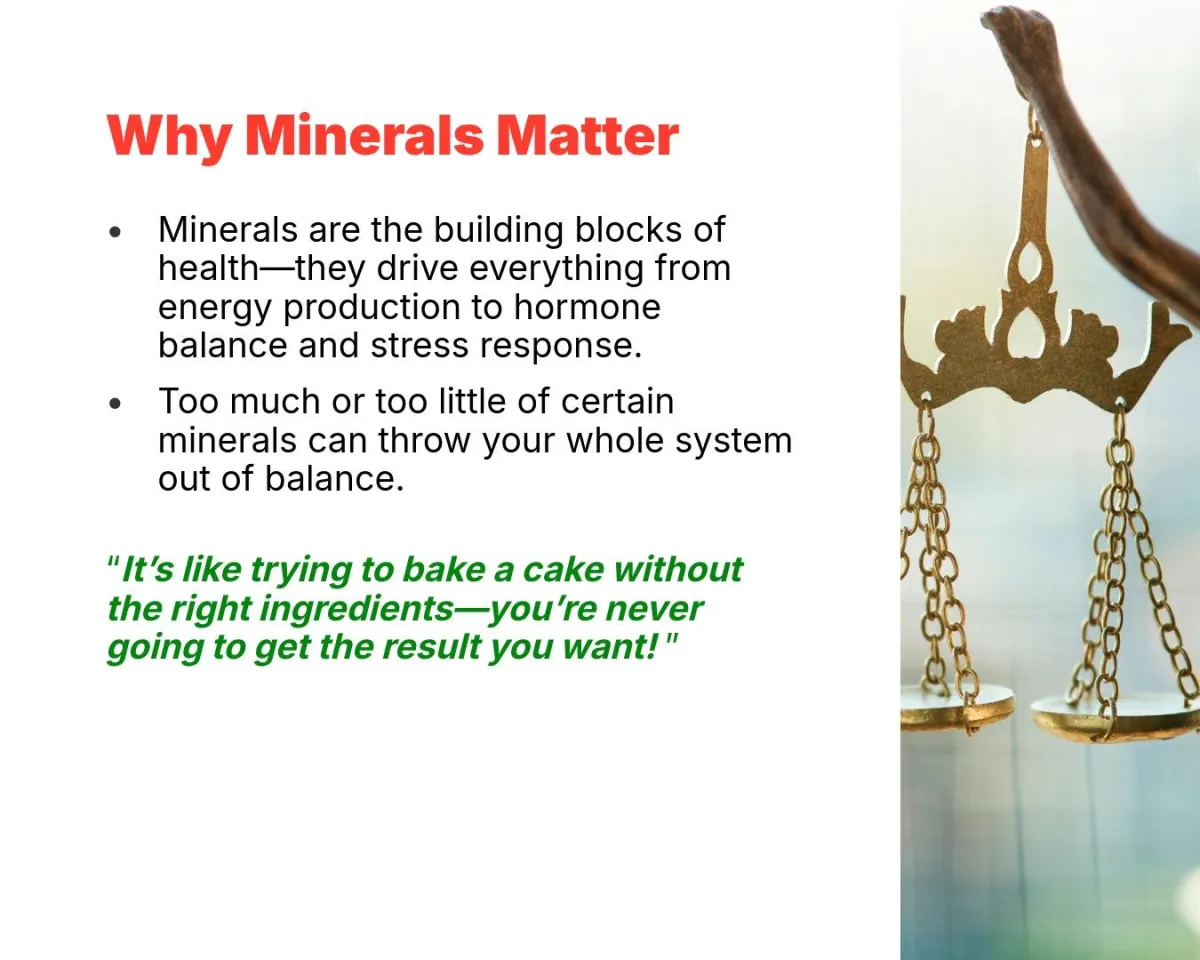
The Spark Plugs of Life
Minerals: The Spark Plugs of Life
Minerals are not optional extras. They are not just an Instagram fad you see online and decide to try.
They’re the spark plugs that fire up every system in your body, from thyroid hormones to blood sugar balance to stress response. Without enough minerals in the right balance, your body is like a car with a dead battery. It won’t run properly, no matter how much fuel (food) you give it.
If this is you, keep reading
If you’re in midlife and you feel like your body suddenly stopped cooperating, this is for you.
You might relate to things like:
Afternoon crashes, even after a decent night of sleep
Feeling wired but tired, like your brain won’t shut off but your body is dragging
Craving salt, sugar, or both
Bloating, constipation, or feeling puffy more often than you used to
Anxiety, irritability, or mood swings that feel “new”
Weight gain that doesn’t match your effort
Workouts that used to energize you, now wipe you out
That’s not “just aging.” That’s often a signal that your mineral foundation is off.
Why guessing doesn’t work
A lot of women are told: eat less, work out more, and just push through.
But if your minerals are depleted, that advice can actually dig the hole deeper.
Stress burns through key minerals.
Overtraining can drain you faster.
Dieting harder can reduce the very nutrients your body needs to make energy.
Fatigue, weight gain, brain fog, sleep struggles, and mood swings aren’t just about willpower. They’re common signs the mineral system is out of balance, especially during hormonal shifts.
And here’s the frustrating part, blood tests can look “normal” while you still feel terrible.
Bloodwork is important, but it’s mostly a snapshot of what’s circulating right now.
Hair Tissue Mineral Analysis (HTMA) can add another layer by reflecting mineral patterns and stress chemistry over time, based on what your body is excreting and storing. It often highlights trends that don’t show up clearly on standard labs.
That’s where stress, hormones, toxins, and diet leave their mark.
Before you guess at supplements, start here
You don’t need a cabinet full of pills to start supporting your mineral system.
Start with the basics that make minerals actually work.
Eat protein at breakfast
Minerals don’t work well on an empty tank. A solid breakfast with protein helps stabilize blood sugar and reduces the stress load on your adrenals.Build mineral-rich “anchors” into your day
Choose a few simple go-to habits:
Use quality sea salt on food (not fear-based low-salt living)
Aim for potassium-rich foods daily (citrus, potatoes, coconut water, squash, beans if tolerated)
Include magnesium foods (pumpkin seeds, cacao, leafy greens, mineral water)Stop punishing workouts if you’re exhausted
If you’re running on fumes, more intensity isn’t the answer. Overtraining can drain minerals faster, raise stress hormones, and worsen fatigue, sleep, and weight loss resistance. Support your body with walking, strength training that feels sustainable, mobility, and nervous system regulation.
These steps help, but if you’re still feeling stuck, that’s when testing becomes the game changer.
What HTMA can reveal
HTMA doesn’t just look at single minerals, it looks at patterns. This matters because minerals act like a team. Ratios often tell the real story.
Here’s what HTMA can help you see:
Adrenal patterns, often reflected through sodium and magnesium balance
Thyroid activity patterns, often reflected through the calcium-to-potassium ratio
Stress adaptation, how your body has been compensating or burning out
Toxic element patterns, including whether your system appears ready to release and clear stored metals
Slow vs. fast oxidation tendencies, basically your metabolic “engine speed”
Instead of throwing supplements at random, HTMA helps you see where your body is right now, and what it needs first.
What happens when you test with me

If you decide to test, here’s exactly what the process looks like:
You order your HTMA kit and take the sample at home
After being tested at the laboratory, I analyze your minerals, ratios, and toxic elements, plus your symptoms and health history
You get a clear plan that tells you what to focus on first, food and lifestyle foundations, supplement priorities, and what NOT to push yet
We retest and adjust based on how your body responds
No guessing. No copy-paste protocols. Just a roadmap based on your actual mineral pattern.
TEST DON’T GUESS, click here to set up your HTMA Test and Consultation
Key takeaways you need to know
Stress steals minerals
Stress, physical or emotional, burns through minerals like magnesium, potassium, and zinc. When you don’t rebuild those reserves, the body often shifts into a slower, more depleted state, think fatigue, weight gain, and burnout patterns.
Copper stress is common
Copper issues are more common than most women realize, especially with a history of birth control use, copper IUDs, chronic stress, or certain dietary patterns. Copper imbalance can add to thyroid slowdown patterns and can be connected to anxiety, insomnia, irritability, and feeling “overstimulated.”
Ratios matter more than isolated numbers
A low sodium number doesn’t just mean “eat more salt.” It can reflect adrenal strain and poor stress tolerance. High calcium doesn’t automatically mean “cut dairy.” It may point to a potassium deficit or a slowing pattern. HTMA helps connect the dots.
Detox happens in phases
When minerals improve and the body feels safer, it may finally start releasing stored toxins. That’s why metals can sometimes rise on a retest, not because you’re getting worse, but because your body is mobilizing and moving things out. Timing matters, and detox is not always the first step.
Bio-individuality rules
No two HTMA patterns are the same. What energizes one person can overwhelm another. That’s why context matters, your symptoms, history, nervous system state, and current stress load all change how a plan should look.
Why this matters for women in hormonal shifts
When estrogen and progesterone fluctuate, mineral needs skyrocket. Your adrenals and thyroid often take the hit first, and you feel it as exhaustion, sleep changes, mood swings, and weight loss resistance.
Just cutting carbs harder or doubling workouts won’t fix the foundation. Your body needs the cellular spark plugs restored first.
HTMA can help pinpoint whether your fatigue and weight struggle is more driven by adrenal strain, thyroid slowdown patterns, copper stress, or blood sugar instability.
That clarity is what stops the spiral of trying everything and getting nowhere.
How to support your mineral system
Start with the basics, then get specific.
Use an HTMA test to map your personal mineral pattern.
Focus on mineral foundations through food first, then targeted supplements based on your pattern.
Consider an adrenal cocktail as a gentle daily support, especially if you tend toward low energy and cravings: Orange juice, sea salt, and cream of tartar (potassium), adjust to your tolerance and needs.
Prioritize lifestyle changes that reduce mineral burn: sleep, sunlight, deep breathing, walking, strength training that supports recovery, and nervous system regulation.
A quick FAQ before you sign up for your test today
Can’t I just take magnesium and call it a day?
Magnesium can be helpful, but minerals work in ratios. Pushing one mineral without understanding your pattern can backfire for some people, sleep changes, palpitations, low blood pressure symptoms, digestive issues, or feeling more drained.
What if my bloodwork is normal?
Normal ranges don’t always reflect functional depletion patterns, especially during chronic stress and menopause transitions. Bloodwork is still valuable, HTMA simply adds another layer of pattern data.
Is detox always the first step?
Not usually. Most bodies need to rebuild minerals and stabilize stress chemistry first. Detox tends to go better when the foundation is stronger.
The bottom line
Mineral balancing isn’t about chasing symptoms. It’s about rebuilding the foundation.
As Dr. Malter teaches, minerals are the spark plugs of life. If they’re drained, your “engine” sputters.
HTMA takes the guesswork out by showing you where your system stands, and what support makes sense now.
Stop guessing. Start testing. Your body has the answers.
TEST DON’T GUESS, click here to set up your HTMA Test and Consultation




© Copyright JAMSesh Fitness and Health 2026